
greater Denver
Metro area


What Denver Homeowners Should Know About Freeze-Thaw Cycles and HVAC Exhaust Venting
In Denver, we are famous for our blue-sky winters and the legendary “Chinook” winds that can swing the temperature by forty degrees in a single afternoon. While these warm breaks are a welcome relief from the mountain cold, they create a unique challenge for your home’s infrastructure. The constant shifting between freezing nights and balmy days creates what engineers call a freeze-thaw cycle.
Most homeowners know how these cycles affect our roads (potholes) and our plumbing (burst pipes), but few realize the significant impact they have on high-efficiency HVAC systems. Specifically, your furnace’s intake and exhaust venting, the white PVC pipes usually found on the side of your home, are highly vulnerable to these rapid temperature swings.
At Rogers & Sons, we believe that comfort is about the details. With over 45 years of experience in the Denver area, we have seen how a lack of attention to these quiet, overlooked pipes can lead to system shutdowns and safety hazards. Here is what you need to know to keep your home running smoothly through a Colorado winter.
The Physics of Freeze-Thaw and HVAC Vents
High-efficiency furnaces (90% AFUE or higher) operate differently from the older units many of us grew up with. Instead of venting hot exhaust through a metal chimney on the roof, they use secondary heat exchangers to pull every bit of warmth out of the fuel. This process creates a significant amount of condensation.
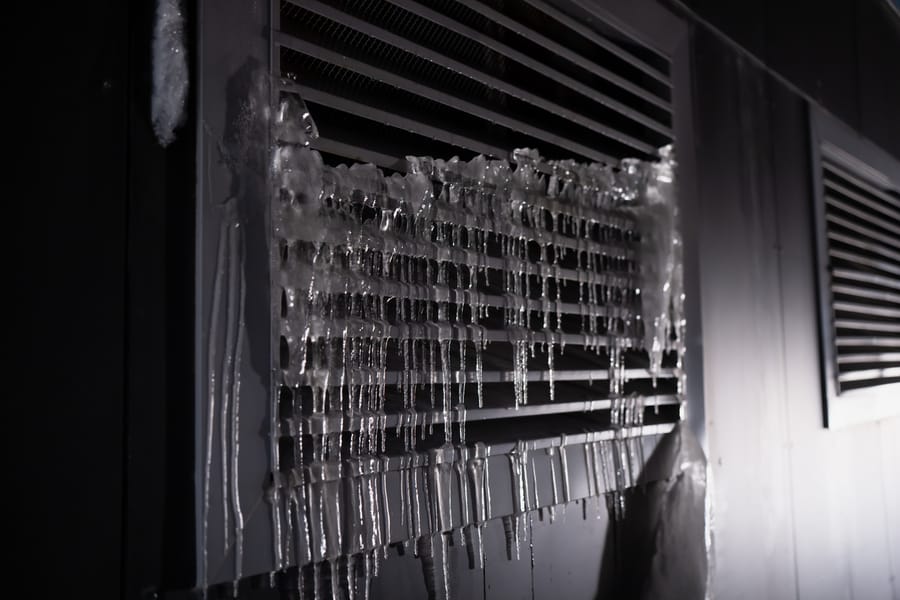
The “Ice Sculpture” Effect
In a high-efficiency system, the exhaust is essentially warm, moist air. As this air exits the PVC pipe into the freezing Denver night, the moisture condenses and begins to freeze around the termination point.
-
The Thaw: During a sunny Denver afternoon, that ice might melt slightly or turn into slush.
-
The Refreeze: As the sun dips behind the Rockies, that slush freezes solid, often forming “ice sculptures” or thick “beards” of frost that can eventually seal the vent completely.
The Problem with Clogged Vents
When a vent is blocked by ice, your furnace cannot “breathe.” Modern systems are equipped with safety sensors called pressure switches. If the sensor detects that the exhaust is blocked, it will shut the furnace down immediately to prevent carbon monoxide from backing up into your home. While this safety feature is a lifesaver, it can leave you without heat during a midnight deep freeze.
Denver-Specific Risk Factors
Our local climate and geography make HVAC venting issues more common here than in other parts of the country.
Drifting Snow and Intake Blockages
In neighborhoods like Central Park or the newer developments in Castle Rock, wind-driven snow can easily drift against the side of a house. If your intake and exhaust pipes are installed too low to the ground, a single storm can bury them.
-
The Rule of Thumb: At Rogers & Sons, we ensure vents are installed at least 12 inches above the anticipated snow line. If your home has older venting that sits low to the ground, you may need a professional “snorkel” extension to elevate the termination point.
The High-Altitude Combustion Gap
Denver’s thin air affects how fuels burn. At 5,280 feet, there is 20 percent less oxygen than at sea level. This means your furnace’s combustion must be perfectly calibrated. If the venting is partially restricted by ice or frost, the air-to-fuel ratio is thrown off, leading to “dirty” combustion that can soot up your heat exchanger and reduce the lifespan of your system.
The Silent Danger: Carbon Monoxide (CO)
The most serious risk associated with blocked venting is the potential for carbon monoxide buildup. CO is a colorless, odorless gas that is a natural byproduct of combustion.
-
Safety First: If your exhaust vent is blocked and your furnace’s safety switches fail, CO can be pushed back into your living spaces.
-
The Solution: Every Denver home should be equipped with functioning CO detectors on every level, especially near sleeping areas. Checking these detectors should be as much a part of your winter routine as shoveling the driveway.
Maintenance Tips for Denver Homeowners
You don’t have to be an HVAC expert to protect your system. A few simple observations during the winter months can prevent an emergency service call.
The Visual Inspection
After a heavy snowfall or a particularly cold night, take a walk around the exterior of your home.
-
Look for Frost: Check the white PVC pipes for any signs of ice buildup or frost “crystals” inside the openings.
-
Clear the Path: Shovel a wide berth (at least three feet) around your vents. Do not use a snowblower near the pipes, as the force can crack the PVC.
-
Remove Icicles: If your vents are located under a roof eave, check for hanging icicles. As they melt and refreeze, they can drip directly onto the vent, sealing it shut with ice.
The Importance of Pipe Pitch
When Rogers & Sons installs a high-efficiency system, we pay meticulous attention to the “pitch” of the pipes. Venting must slope back toward the furnace so that the condensation can drain properly into the internal drainage system. If a pipe sags or was installed flat, water will pool and freeze inside the pipe during a cold snap, creating an invisible blockage that is difficult to clear.
When to Call the Professionals at Rogers & Sons
If you notice your furnace is “short-cycling” (turning on and off every few minutes) or if you see an error code on your thermostat related to airflow or pressure, it is time for a professional inspection.
Our licensed technicians use specialized tools to check the integrity of your venting system, ensure proper high-altitude calibration, and verify that all safety switches are functioning correctly. We treat every home with “Residential Care,” meaning we look beyond the immediate fix to ensure your system is engineered to last through decades of Colorado winters.
Engineering Comfort in the Mile High City
Denver’s freeze-thaw cycles are a beautiful part of our “300 days of sunshine,” but they require a proactive approach to home maintenance. By keeping an eye on your HVAC exhaust vents and ensuring they are clear of ice and snow, you are protecting your family’s safety and your home’s efficiency.
At Rogers & Sons, we have spent nearly half a century perfecting HVAC solutions for the unique challenges of the Front Range. From luxury estates to traditional residences, we bring precision and expertise to every project.
Contact Rogers & Sons today to schedule your planned maintenance and ensure your heating system is ready for whatever the Colorado winter throws its way.

Here to Help